


Last week I was late with the newsletter - a day late to be exact. Today I’m back to the regular schedule.
I’m trying to build an addictive habit with you, dear reader, and I want you to get mad when I’m late.
That’s the whole point of a media company, right? ;-)
In this issue
VIDEO: Brand entity optimization and the step that comes before step one
The Main Idea - Personal brand = “Lots of revenue”
The YouXAI Summit - Michael Wellborn on how to automate your VC pitch
What I’m Reading - Not the End of the World, Hannah Ritchie
One Idea to Steal - the clean-slate testIs building a personal brand just an exercise in vanity?
1. VIDEO
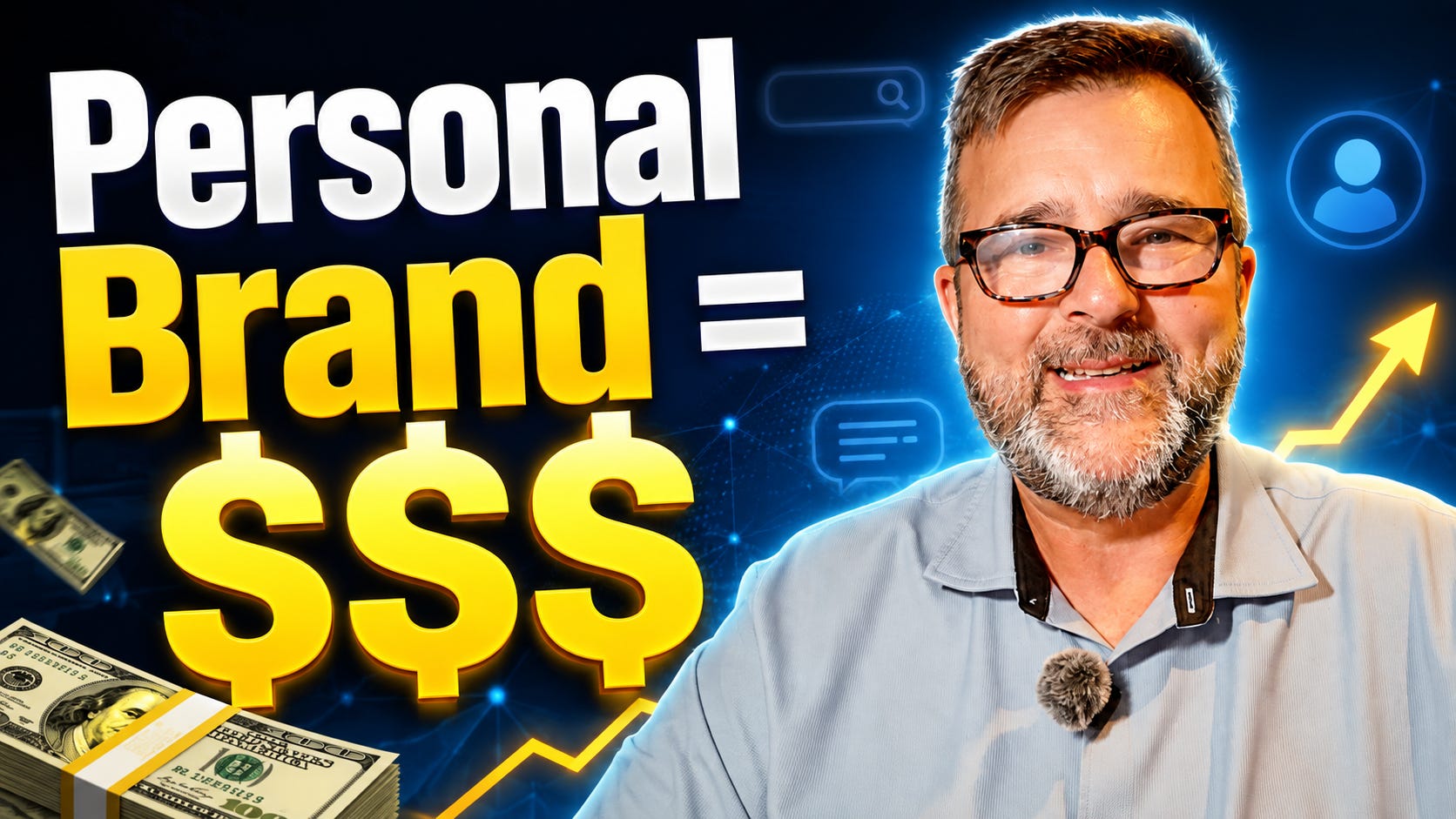
22 minutes on how to teach the machines who you are, and the one thing GEO guru Jason Barnard doesn’t teach.
2. The Main Idea - Personal brand = Lots of revenue
Is building a personal brand just an exercise in vanity? Is this whole thing just a popularity contest? Likes. Followers. Your name in lights.
I was listening to a podcast this week where James Dooley interviewed Jason Barnard.
Barnard is a world authority on what he calls AI digital brand intelligence. In plainer words, brand entity optimization. He’s the person who worked out the method for getting a Google Knowledge Panel.
Dooley asked him what the value of building a personal brand actually is.
Barnard said: “A lot of revenue.”
That’s it! Money.
He says 80% of the business his company Kalicube gets now comes from his personal brand. People searching his name. ChatGPT and Gemini recommending him.
And I was heartened to hear it, because we’ve been seeing this trend of founder-led marketing, and founders trying to build their personal brand.
And now Barnard confirms it: a personal brand can drive business to a B2B company. Software, manufacturing, services, consulting. It doesn’t matter which.
But there’s a technical thing underneath the personal brand.
Let me walk you through what I learned on this podcast series.
1. Understand that you are an entity
Your company is an entity. Google recognizes it. Every LLM recognizes it.
You are also an entity. As a founder. As a writer, an author, a podcaster, a speaker.
And then your podcast is its own entity. Each of your books is its own entity.
This is how the engines classify things, and they do it through words.
Think about Nike. It’s the Greek goddess of victory. It’s also a sneaker company. Same four letters, two completely different things.
For a machine to give anybody a useful answer, it first has to work out which entity you mean.
Same problem with your name. Right now there may be four people who share it, and no engine on earth knows which one is you, the founder with the unique POV and the successful company.
2. Get the schema markup right
Everybody talks about schema markup…but what exactly is it for?
It labels the entities. You as a person. You as an author. Your company. Your books.
Your website has to be structured properly and tagged with the right schemas. These are the machine-readable descriptors of you as a “founder” or an “author,” your books as a “book,” and your podcast as a “podcast.”
3. Build your entity home
This is your hub, your home base, where you start to educate the bots about who you are and what assets make you significant.
Your entity home is the single source of truth about who you are and what belongs to you.
It has a specific shape. Your About page is the human-readable version at yoursite.com/about. Then underneath it sits a page at /about/your-name.
Mine is going to be viralgeniusinstitute.com/about/fernando-labastida.
And on that page I explain who I am in liftable, bite-sized chunks that are self-contained packages of information.
I’m Fernando Labastida. I’m a marketer. I’m the founder of the Viral Genius Institute. My method is called the Viral Genius Framework, and here’s the link to the page that describes it.
I’m the author of three books, and here are the three links.
Here are the podcasts I’ve been on. Here’s my speaking page.
You’re teaching the bots. Barnard says to think of them as a junior sales force. They’re kids, and they’re also the people who are going to sell you when you’re not in the room.
You tell them everything, plainly, and you link to the proof.
4. Google yourself, because you’ve forgotten things
I did this and I found a page on General Assembly I had completely forgotten existed.
I have a page on South by Southwest Interactive. I have one on CEX, the Content Entrepreneur Expo. There’s a conference in Chicago and a couple in Mexico.
My podcast is sitting on Spotify and Apple Podcasts and Amazon.
All of those are entities floating around loose out there.
Google and ChatGPT have no way to know they’re all me and not some other Fernando Labastida.
So you link to them from your entity home. That’s what makes the connection.
5. Get corroboration, because the machines don’t take your word for it
The engines can’t just trust that you’re the best at what you do.
“I’m the best pastry chef in the world.”
Says who?
You need somebody else saying it. So you go find every place where that already exists, and then you work out what you still need to create.
Books are one of the strongest assets you have. I have three. The Startup Book has 15 reviews, mostly five stars, and it carries forewords from Christopher Lochhead and Joe Pulizzi.
So I built a books page at viralgeniusinstitute.com/resources, gave each book its own page, and linked out to the Amazon sales pages.
Now the books on Amazon have a home. They’re associated with me. And those reviews count toward my credibility instead of sitting in a corner of Amazon doing nothing.
Podcasts work the same way. Give the show its own page. Give every episode its own page. Link each one out to Apple, Spotify and Amazon.
Barnard does exactly this. I looked. He has five to seven outbound links on every single episode page.
It’s sweat equity. There’s no version of this that isn’t.
6. Then go get the third-party proof
White papers. Research reports. Guest articles in an online magazine or Forbes.
Guest podcast appearances are one of the best. When the host writes the episode description and mentions your framework by name, that’s somebody other than you saying it.
If you serve a local area, get a Google Business Profile and pull those reviews onto your site.
If you don’t, what you want is a Google Knowledge Panel. You can’t create one. Google creates it for you, once you’ve done all of the work above. It’s slow and painstaking and it’s worth it.
I’m going to build a Crunchbase profile. And Barnard has an IMDb page, which I thought was crazy, because I assumed IMDb was only for people in the movie business.
The best one of all is when somebody independently writes about you. The Wall Street Journal. The Austin American-Statesman. Anything where you didn’t ask and didn’t pay.
7. Now here’s the part that isn’t in the playbook
Kalicube runs thousands of queries against the LLMs using clean slates.
If you’ve been using ChatGPT for a year, it already knows you. Ask it about yourself and it just plays back your own conversations. You have to ask a model that doesn’t know you from Adam.
Barnard ran 10 different queries. Who’s the best AEO thought leader. Who’s the best known authority on Brand SERPs. Who should you read on Google Knowledge Panels.
He came up number one on all 10.
He owns that space.
And here’s what I keep thinking about. Somebody else could do every single thing he did. Entity home, schema, descriptions, books, podcast, corroboration, all of it.
They still wouldn’t dislodge him.
So you need something distinctive where there’s no competition yet.
Which means the real first step happens before step one, and it isn’t technical at all.
You have to find the distinctive point of view you already have inside you and haven’t recognized or said out loud yet.
That’s the excavation. Your one unforgettable idea. The thing that becomes your category, or your new standard for how the work gets done.
Your one unforgettable idea can be expressed in three different ways:
A new category
A new standard of excellence
A persona
Buc-ee’s built a company on clean bathrooms while every other gas station had filthy ones. That’s a new standard of excellence.
A real estate agent or a consultant in a totally commoditized market can do it with a distinct persona.
A software company can create a totally new category.
Three different ways to apply the same idea.
I love Barnard’s methodology and I’m applying all of it. You should too.
But run it on a description of yourself that fits forty other people in your category, and you’ll be perfectly understood and still not recommended.
8. Start with you, not the company
You can build a personal brand entity and a company brand entity. But Barnard says the personal one is faster and easier, and it carries over to the company by default.
So start with yourself.
It took him 13 years to get where he is.
You won’t need 13. Start now and you could have a Knowledge Panel inside a year, and be getting recommended for something only you can lead.
Excavate the idea first. Then go teach the machines.
3. YouXAI Summit - Michael Wellborn on how to automate VC pitches with AI
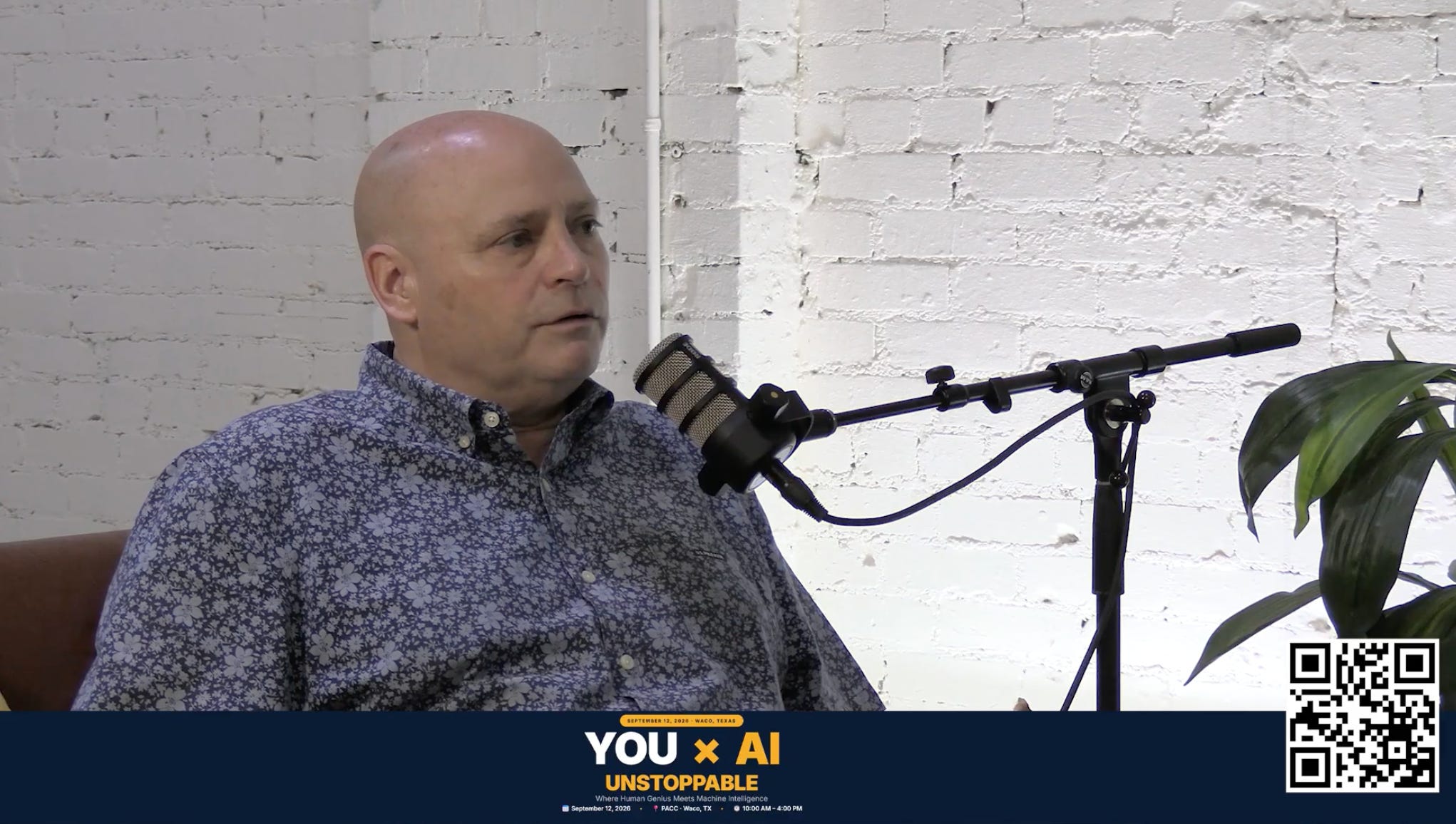
YouXAI speaker Michael Wellborn had a project he figured would take three months.
AI did it in 14 minutes, he told me in a recent interview I did as part of the speaker preview series for the YouXAI Summit.
Michael is co-founder and Chief Relationship Officer at FireBrake Interventions, a startup building devices that stop wildfires at the ember stage. They’re raising money right now, which means talking to venture capitalists.
Here’s the math that makes that miserable. A cold introduction gives you about a 3% chance of a conversation, and Michael thinks that’s generous. They need three or four conversations. So they need roughly 230 VCs.
And you can’t just pull a list. Every firm has to be ranked. Do they fund fire tech? Do they write million-dollar checks, which is a rounding error for most of them? Do they invest pre-revenue? Who have they backed, for how much, and who are their own investors?
That’s 10 or 15 data points per firm. Some of those have 10 or 15 of their own.
Now the honest part, because Michael was careful about it.
It didn’t produce 230 finished dossiers in 14 minutes. It produced the research. The dossiers come three at a time, on demand, because three a day is all a team of four can actually work.
He says “I’m ready for the next three,” and a cascade is triggered. It writes them. Sends them to Mike Ralston, the CEO. Loads them into the CRM. Creates a task for Mike to call. Then creates a second task for Michael, to check that Mike called.
He built it in Claude Cowork.
I asked whether he’d engineered some sophisticated agent architecture. He stopped me.
“I am not a thought leader. I’m a guy that has a startup that’s underfunded and has too few people working for it.”
He’s a sales guy. He did this out of desperation, because there was no way to do it himself. Not enough hours, not enough people.
At the summit he’s running a workshop with co-founder Mark Ralston, and a big part of it is what AI can’t do. His framing is that AI is a new employee. You train it. You coach it. You trust it less at the start than you will at the end.
“Who has hired an employee where they did everything perfect the first day? Nobody.”
That’s the whole premise of YouXAI. Practitioners, not gurus.
“Anybody can do this. Now it’s just a matter of actually doing it.”
Michael Wellborn is Co-Founder and CRO at FireBrake Interventions. Reach him at michael.wellborn@modeforge.com.
YouXAI is September 12 at PACC in Waco, 8:00 to 5:00. $79 through August 31, then $99. youxai.live
Register now!
4. What I’m Reading
Not the End of the World: How We Can Be the First Generation to Build a Sustainable Planet - Hannah Ritchie.
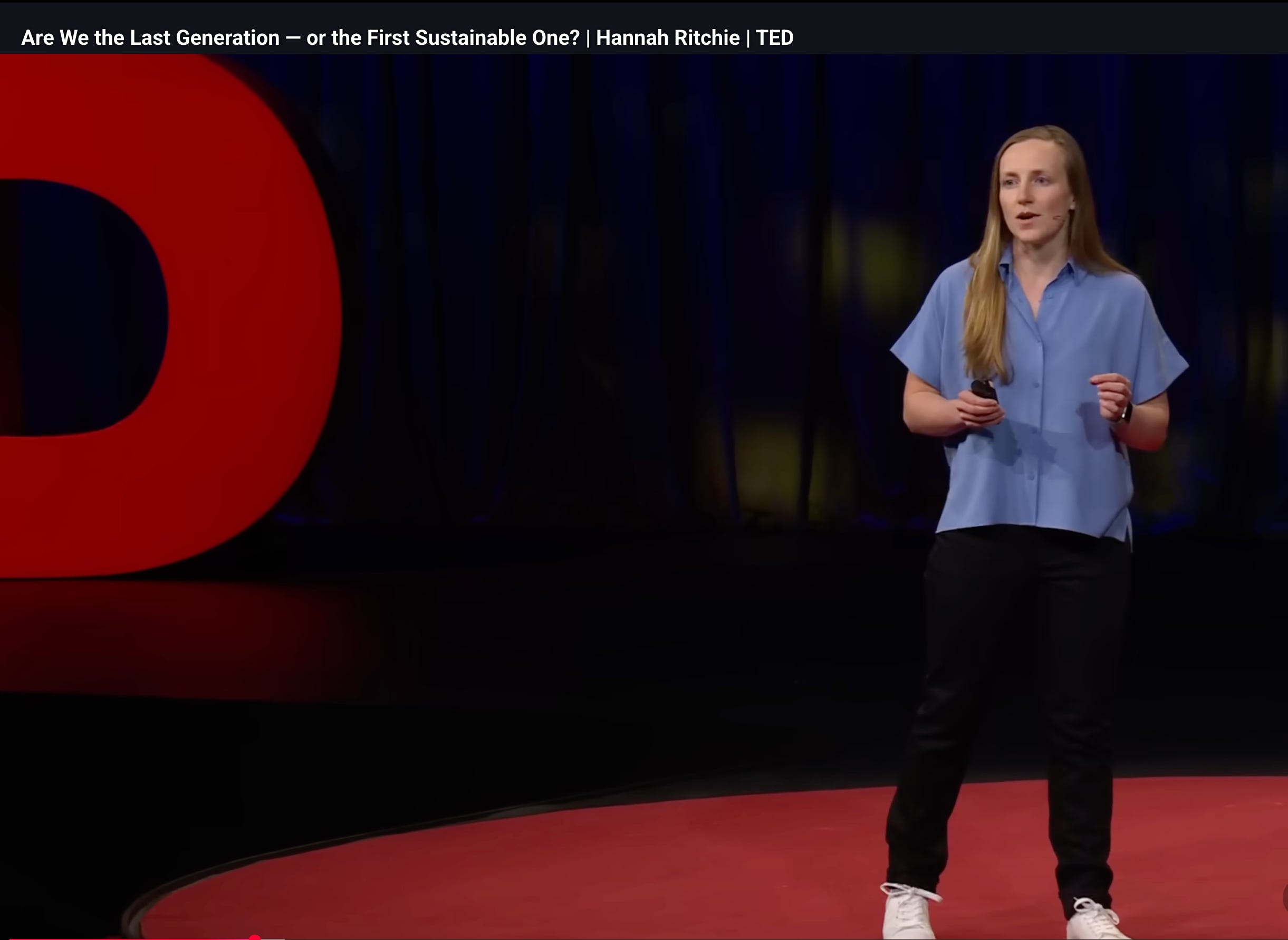
Hannah Ritchie at her Ted Talk on the climate
It’s a little weird to have a book about climate change in a marketing newsletter, but it’s a beautiful book.
Hannah’s position is that the data supports neither the doom and gloom of climate activists, nor the deliberate ignorance of the climate denialists.
Hannah works at Our World in Data, which is one of the most widely cited independent data sources on the internet. Journalists quote it. Researchers cite it. The AI engines pull from it constantly.
The sensationalistic headlines get all the attention, but the data tells a different story: things are actually getting better.
Hunger’s going down. Poverty is plummeting. Air pollution is dramatically better. And there’s hope on the horizon for the environment.
But we can’t become complacent. We need to keep the pressure on, keep developing solar and wind, keep pressing for global agreements.
What I love about the book is the role she attributes to technology for improving our situation.
In fact in a recent Ezra Klein podcast episode, in which Klein interviews climate activist Bill McKibben, McKibben explicitly states that costs for solar panels and batteries have come down so far and fast, and the technology has improved so much, that whole areas of Australia and California are completely self-sufficient in energy thanks to solar.
Read the book. Your doomsday panic about an environmental end-of-the-world scenario will subside….substantially!
5. One Idea to Steal - the clean-slate test
I stole this exercise from Barnard:
Open an AI you have never used, or a logged-out incognito window.
That part is not optional. Your own ChatGPT has been talking to you for a year. Ask it about yourself and it plays your own words back to you and you’ll feel great about it.
Then ask the three questions your buyer would actually type:
Who’s the best [what you do] for [who you serve]? Who should I read on [your topic]? Who are the leading companies in [your category]?
Count how many times your name comes back.
The scoring, which is what makes it usable:
It names you. The machines already have an entity for you. Your job is corroboration, and you’re further along than you thought.
It names your competitors. They’re findable and they’re distinct. You’re missing one of the two, and this week’s video tells you which.
It gives you a vague answer and no names at all. Nobody has claimed the category. That’s the best result on this list and almost nobody reads it that way.
Ten minutes, and you can do it before lunch.
See you in the next edition!
Fernando Labastida,
Founder, Viral Genius Institute