


Nine days left till the YouXAI Summit, and every day is filled with the million tasks of organizing an in-person conference with a skeleton crew.
It’s a miracle I even got this newsletter out. But the show must go on!
In today’s edition:
VIDEO: The science of being different: How to use cognitive task analysis, and applied cognitive task analysis, to differentiate yourself in the marketplace.
Why you should travel to Waco on the 12th: Why a small AI conference in the small city of Waco could change your business trajectory.
Try this at home: How Claude Code on my phone has been a lifesaver for my crazy life.
What I’m reading now: The Long Game by Dorie Clark
1. VIDEO: The science of being different
Last week I told you every founder is sitting on one unforgettable idea.
A few of you wrote back and asked a fair question. How do I actually find mine?
So today I want to give you the science.
It’s not my framework, but an actual field of cognitive science, with named researchers and peer-reviewed papers, that has been solving exactly this problem since the 1980s.
It just wasn’t built for us. It was built for firefighters, doctors, nurses…mission critical professionals.
Let me start with why this matters more this year than last year.
Everything is copyable now
Vibe coding now enables anyone with an idea can ship software in a weekend.
And because of AI, the cost of building a startup is a lot cheaper.
And for physical products, a factory in Shenzhen can clone your thing and have it on a boat before you’ve finished your seed round.
So whatever your product does today, somebody else will do it too. Maybe next quarter. Maybe next month.
The typical product differentiator is a short-term advantage.
Today, the only way to differentiate is you.
The specific way you, as a human, solve your customer’s problem.
Naval Ravikant says “you are the product.”
But how do you implement this in practical terms?
The classic answer: say what everybody does
I’ll repeat a story most marketers know.
In the 1920s, Schlitz was the fifth-biggest beer in America. They hired Claude Hopkins. Hopkins asked to be walked through the brewery.
They showed him the plate-glass rooms where the beer was cooled in filtered air. They showed him spring-fed water pumped up from deep wells. They showed him the steam that sterilized every bottle, three times over.
Hopkins said: write about this.
The brewers said: everybody does that.
Yeah. But nobody’s talking about it.
Schlitz went from fifth to first.
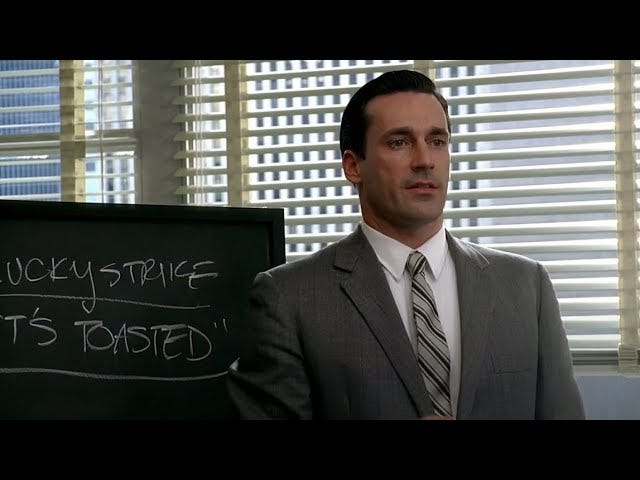
The same trick shows up in Mad Men, when Don Draper asks the Lucky Strike executives to walk him through how the cigarettes get made. They mention that the tobacco is toasted. Draper writes one word on the chalkboard.
Toasted.
Every other cigarette maker toasted their tobacco too. Lucky Strike was just the one who said it out loud.
The real story dates back to 1917..the 1960s Don Draper version was creative icense.
That’s move one.
You take something everybody in the company already knows, something they think is no big deal, and you say it before anyone else does. You own the concept in the head of the market.
Here’s the problem with move one: Your competitor can read your website on Tuesday and say “we do that too” on Wednesday. They’ll add something on top of it. Now you’re back where you started.
Which is why I want to talk about move two.
The baker was twisting the dough
In the late 1980s, Matsushita was trying to build a home bread machine and could not get the crust right.
The dough came out wrong.
So one of their software engineers went and apprenticed herself to the head baker at a hotel in Osaka. She wanted to stand next to him and do what he did, every day, until she saw something.
What she saw was that he wasn’t just kneading the dough.
He was twisting it.
She asked him why he’d never mentioned the twist. He said he’d never thought about it. It was just part of the way he kneaded.
They built ribs inside the machine that knead and twist together. The bread came out right. The product blew through its first-year sales goal.
Now look at what actually happened there.
The most valuable piece of information in that entire project was sitting in a man’s hands. He had it. He used it every single day. And he could not tell you he had it.
That’s tacit knowledge. It’s the stuff you know and don’t know you know.
And it is the only differentiator your competitors cannot copy, because they can’t copy what you haven’t said, and you haven’t said it because you don’t know it’s there.
The firefighter and the floor
So how do you get it out of someone’s head?
This is where the science comes in.
There’s a field called naturalistic decision-making, built by researchers including Gary Klein, Robert Hoffman and Richard Clark. They studied how firefighters, nurses and doctors make decisions under pressure.
Here’s the example that made the field famous.
A firefighter is on the second floor of a house that’s fully engulfed. He’s looking the floor. And then something makes him stop and say: we’ve got to get out of here now.
They get out.
The floor collapses.
Ask him later how he knew, and he can’t tell you. He’ll describe what he did. He can’t describe how he knew to do it. When he goes and teaches the class, that part isn’t in the class, because he was never conscious of it in the first place.
That’s naturalistic decision-making. The expert decides by feel.
In conscious decision-making is the other thing, you look at a problem, you lay out the options, you weigh them, you pick the best one. That’s what we all imagine expertise looks like.
It isn’t. Not at the top.
A surgeon who has done a thousand of the same operation isn’t weighing options. A nurse who has placed tens of thousands of stents isn’t running a decision tree.
They just know.
And the whole discipline of cognitive task analysis exists to drag that knowing into the open so it can be taught to the next person.
The method, and why you can’t use it
Cognitive task analysis has a real toolkit. The critical decision method. Concept mapping. PARI, which stands for precursor, action, result, interpretation. Goal-directed task analysis. Think-aloud protocols. Richard Clark’s concepts, processes and principles.
Look them up. They’re worth an afternoon.
But there’s a catch. These methods are hard, and they’re really meant to be run by trained cognitive scientists.
Which is no good for a marketer.
Are you going to send the person who runs your Facebook ads to graduate school in cognitive psychology so they can write your positioning? I don’t think so.
Then in 1998, two researchers named Laura Militello and Robert Hutton published applied cognitive task analysis. ACTA. Same goal, built for practitioners.
Four tools:
1. The task diagram. You ask the expert to break their work into three to six major steps, and then flag which of those steps demands the most judgment. That’s your map, and the flag tells you where to dig.
2. The knowledge audit. A fixed set of probes drawn from expertise research. Noticing. The big picture. Anomalies. Job smarts. Self-monitoring. Improvising. Past and future. You take the hard steps from the task diagram and run the probes on them to pull out the cues, the strategies and the shortcuts.
3. The simulation interview. You walk the expert through a realistic scenario and have them narrate at every point. What do you see here? What are you assessing? What would a novice get wrong right here?
4. The cognitive demands table. The output. One row per hard element. Why it’s hard, what errors are common, and the cues and strategies the expert actually uses.
That’s it. That’s the whole thing. No graduate degree required.
Now point it at a founder
Everything above was designed to extract expertise from firefighters and nurses so it could be taught. I want to extract it from founders so it can be marketed.
The first thing to get right is the task.
The task is not your product workflow. The task is the thing you personally do over and over: diagnosing and solving your customer’s problem.
Paul Graham tells YC founders to do things that don’t scale. What happens when you follow that advice is that you spend a year or two talking to hundreds of people in your ICP, selling to them yourself, watching what lands.
You come out of it with a feel. You can hear a prospect describe their situation for ninety seconds and know what’s actually wrong.
You have no idea how you’re doing that.
So run the four tools on it.
Task diagram. Customer shows up with a problem, on the left. Problem solved, on the right. What are the three to six steps in between? Write them. Circle the one that takes the most judgment.
Knowledge audit. What do you see that the industry misses? What’s the first thing you notice about a customer? What shortcut do you take that would look wrong to an outsider?
That last question is the money question. I’ll show you why in a second.
Simulation interview. Get someone to walk you through a real scenario and make you narrate. This is where the twisting shows up, because you’ll say something out loud that you’ve never written down.
Run it with your co-founder separately, on the same scenario. If you converge, what you’ve found is institutional and it belongs to the company. If you diverge, it’s a personal brand, and it belongs to whichever of you actually does it.
Cognitive demands table, with one column added that isn’t in the original: what does the industry call this, and what should it be called?
Every unnamed row is a coinage candidate.
The realtor who prices low on purpose
Let me show you what one of these rows looks like in real life.
I worked with a realtor who sells in the luxury market. She had figured out how to start bidding wars on her listings, reliably, and drive the final price above what the seller had hoped for.
She could not explain it. She just did it.
So we excavated it, and here’s what came out.
A seller says: I want to list at this price. A novice agent takes the number, lists high, and the house sits. Weeks go by. Eventually the agent has the awkward conversation and they cut the price, and now the listing looks stale.
She lists it low from the start.
The low price pulls in a crowd. The crowd bids against each other. The final number comes in above where the seller wanted to be in the first place.
Look at that against the knowledge audit question. What shortcut do you take that would look wrong to an outsider? Underpricing a luxury listing looks like malpractice. In her hands it’s the whole mechanism.
We named it demand surge.
She’s the demand surge realtor now.
The step the cognitive scientists don’t take
This last part isn’t cognitive task analysis and it isn’t ACTA. It’s the Viral Genius Framework, and it’s where I go past the science.
Once you’ve pulled the tacit thing out of the founder’s head - or the CTO’s head, or whoever the real expert is - you have a list of moves. A list, if you will.
A list isn’t an asset.
So you turn it into one. List the steps. Draw it. A flywheel, a pyramid, a loop, whatever the shape actually is.
Then give it a name.
And then repeat that name everywhere. Your About page. Your LinkedIn headline. Your Twitter bio. The show notes of every podcast you go on - and you should do a podcast campaign. Your speaker page - and you should do a speaking campaign.
Because here’s what you’re building toward.
Somebody hears your name. They want to do due diligence. They Google you, or now they just ask ChatGPT or Claude who you are.
And the answer comes back: that’s Joe Davis, the cloud science guy. Cloud science is his methodology. Here’s how it works.
Your name, next to one idea, coming out of the machine’s mouth instead of yours.
That’s the whole game.
Your homework
Draw the task diagram on yourself. Ten minutes, on paper.
Customer’s problem on the left. Problem solved on the right. Three to six steps in between.
Circle the step you’d have the hardest time handing to a new hire.
That’s where it’s hiding.
Hit reply and tell me what you circled. I read every one.
Fernando
P.S. If you’d rather have someone else run the interview on you, that’s what I do. The excavation is the ACTA protocol above, pointed at a founder, and it ends with a named framework you own. Reply and we’ll set up a time.
2. Why you should travel to Waco, Texas, on Sept. 12th

The name “Waco” conjures up a lot of images in people’s heads: a charismatic leader, a tragedy, maybe Fixer-Upper, the reality show featuring Chip and Joanna Gaines.
But Waco is emerging as a burgeoning creator and startup community.
It will never challenge Palo Alto or Austin, but in this small city of 147,000, there are a surprising number of exciting startups emerging.
And this is why we decided to hold a first of its kind AI conference, the You x AI = Unstoppable summit.
On Saturday, September 12th, 23 speakers, from entrepreneurs, coaches, media personalities to academics, will teach you practical skills on how to use AI to:
Automate your operations
Build your agentic workforce
Set-up your marketing hub
Create your own software (you don’t have to know how to code)
And create content at scale that sounds like you
From Bryan Eisenberg, who coined the term “Conversion Rate Optimization,” to Jermaine Malcolm, a community leader enabling small communities to fill their skills gap, to Professor Hope Koch, a top Baylor University researcher, and more, you’ll learn from top talents in the field.
And you’ll walk away with a changed perspective on what it means to run a business, become an entrepreneur, and become a super hero.
Join us on Saturday, Sept 12th. Tickets are only $99.
3. Try this at home
Or rather, try this when you’re out of your home.
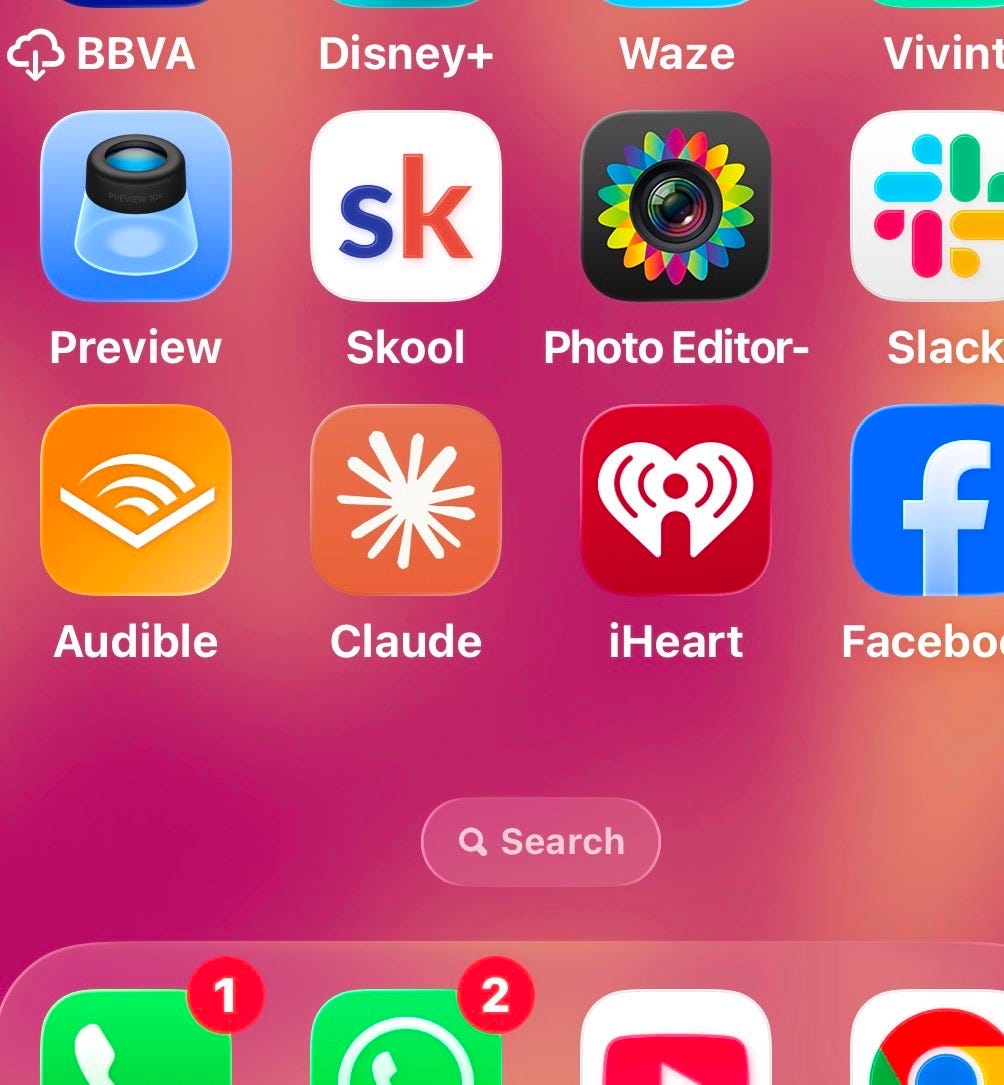
I’ve discovered the joys of using the Claude Code mobile app (well, its’ the Claude app, from where you can access Claude Chat, Claude Cowork, and Claude Code) while I’m out running errands and I need to do something urgently.
I have a chaotic life (don’t we all?). And I need the flexibility to attend to family needs and run errands.
But if a client needs something, like yesterday, while I’m rushing out the door, I can start the task on my laptop, leave it running, and when I get to the store I can give any approvals, request changes, or initiate new tasks remotely.
The Claude mobile app has been a life-changer. Try it, you’ll like it!
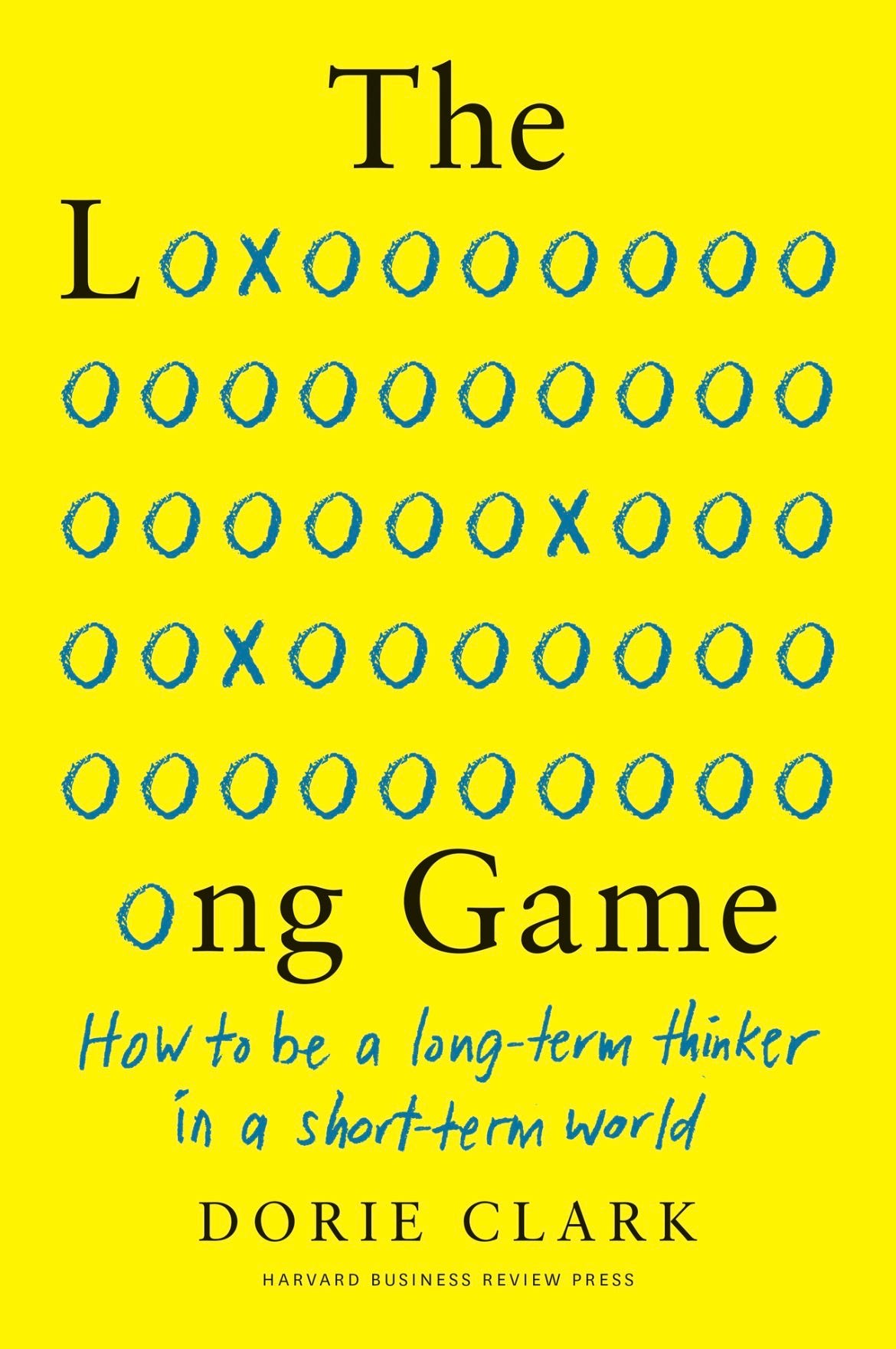
4. What I’m reading now: The Long Game, by Dorie Clark
“Being consistent over a long period of time” has become a cliché in business circles, but not because it’s not true (it is very true). Because it has kind of become a cure-all statement for aspiring entrepreneurs who are ready to throw in the towel.
But what does it look like, in practical terms?
Dorie Clark, author of Stand Out and Reinventing You, wrote The Long Game, a book that genuinely taught me new information, or at least a new take on old information.
Clark’s premise is: we need space to think, yet we’re so busy with the hurry hurry of of everyday lives, of the daily minutiae that takes up our time, we barely have time to breathe.
But if you want to have success over the long haul, you need to make the mental space to actually think about what you want in five, 10, 15 years.
And that’s what we’ve lost.
Clark teaches us how to get that back, and how to put it into practical application.
Think in waves
One of my favorite concepts Clark discusses is thinking in waves. When pursuing success in a creative endeavor - whether you’re a software startup founder, a content creator, a consultant, a thought leader - you have periods of deep, creative work, and periods where you need to get out there and promote yourself.
She calls these waves.
When you’re working on your magnum opus - your original research report, your book, your startup - you need to spend one or two quarters with your head down pouring your heart and soul into it.
This is where focus is critical, and you can’t interrupt it taking on speaking gigs and podcast interviews.
But the next wave requires the opposite: requesting introductions to key players who can open doors for you. Pitching your work. Doing the conference circuit.
Becoming known for something
I found Clark looking for YouTube videos on long-term, strategic thinking, but I discovered she had written a best-welling book about becoming known for a big idea…very similar to my One Unforgettable Idea concept.
That’s her book Stand Out.
I read both in a week, and I really recommend you do too.
Two things:
Check out the YouXAI Summit, and see if it’s for you (and watch the YouTube channel where I interview all the speaker.)
If you’re curious about doing an a cognitive task analysis-like excavation session, schedule some time with me here.
See you next week!
Best,
Fernando Labastida
Round Rock, Texas